


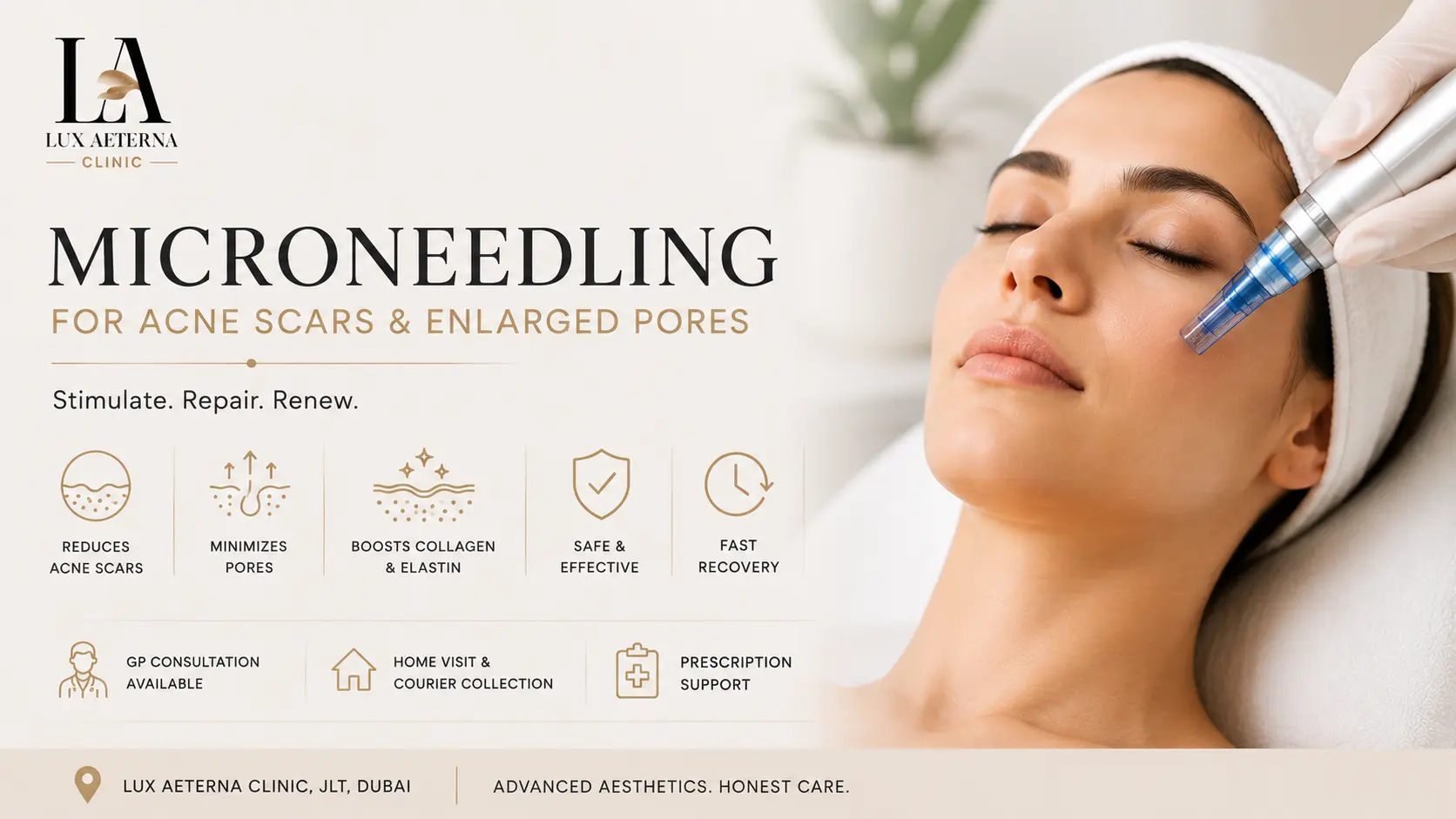
Somebody mentions microneedling and half the room pictures a roller covered in needles, the kind you’d find on a shady corner of the internet. That version exists, sure, but it’s not what actually happens in a clinic, and it’s definitely not what’s doing anything for acne scars or pores. The real treatment works on a completely different level of precision, and understanding that difference is honestly most of what you need to know before booking a session.
The Mechanism, Stripped Down
A device with fine, sterile needles creates thousands of controlled micro-injuries across the skin, each one shallow enough to be safe, deep enough to matter. Your body reads this as damage and responds the way it always does to damage: it starts repairing, which means ramping up collagen and elastin production right where the needles went in.
That’s really it. No product is doing the heavy lifting here, no acid stripping away layers. The skin is essentially convinced to rebuild itself, and the results show up as that rebuild finishes over the following weeks.
Why This Actually Helps Acne Scars
Most acne scarring, boxcar, icepick, rolling, comes down to a collagen shortfall in one spot. The breakout damaged the tissue, healing filled the gap unevenly, and what’s left is a dip in the skin’s surface. Microneedling goes straight at the cause instead of just covering the surface.
A few things worth knowing about how this plays out:
- Rolling scars respond best, since their shallow, wide-edged shape has the most room for new collagen to fill in
- Boxcar scars improve but rarely disappear, especially the deeper ones, which sometimes need to be paired with subcision or filler first
- Icepick scars are the toughest customer, and a series of microneedling sessions alone usually isn’t enough on its own
- Results build over weeks, not days, because collagen remodeling is a slow process no matter how good the session was
None of that means one visit does the job. Most people need a handful of sessions spaced a month or so apart, since new collagen takes time to lay down and the improvement compounds session over session rather than resetting each time.
And Enlarged Pores
Why do pores look bigger in the first place? Usually a mix of things, oil production running high, years of sun exposure, the skin around the opening losing some elasticity, and for some people it’s just genetics no cream was ever going to fix. Microneedling isn’t literally shrinking the hole. What it’s doing is tightening the skin around it, so the opening stops looking as stretched and obvious. Add fresh collagen filling in around each pore, and after a course of sessions people usually notice their skin just looks tighter overall, pores included.
Don’t expect serum-ad speed here. It’s slower than what a pore-minimizing product promises on the bottle. But it’s also actually changing the skin underneath, not blurring things over for a few hours with silicone or a good filter.
What a Session Actually Feels Like
They numb the skin first, so most people describe the actual treatment as uncomfortable rather than painful. Afterward your face looks like you caught a decent sunburn, and that calms down within a day or two on its own. Skip makeup for the rest of that day. And sunscreen isn’t optional for the week that follows, freshly treated skin picks up UV damage faster than it normally would.
A proper microneedling clinic in Dubai will walk you through exactly what to expect based on your skin, since sensitivity and recovery time vary more than people assume, especially in a climate this dry and sunny.
Where SkinPen and Morpheus8 Fit In
Every microneedling device isn’t interchangeable, whatever the marketing implies. Standard microneedling works the top layers of skin, which is exactly what you want for general scarring and texture concerns. A SkinPen treatment in JLT uses a precision device built specifically for that surface-level work, with consistent needle depth that matters a lot for anyone dealing with sensitive or acne-prone skin.
Morpheus8 takes things further by adding radiofrequency energy into the mix, reaching deeper layers and pulling in some skin-tightening benefit alongside the usual collagen response. That combination tends to get chosen for concerns going beyond scarring, sagging skin or looser texture on the body, for instance. A Morpheus8 body treatment works on that same principle, just applied to areas where skin laxity is the bigger concern rather than acne scarring specifically.
A Quick Note on Combining Treatments
Microneedling rarely works alone as the final answer, and a good practitioner will usually say so upfront rather than let you assume otherwise. It’s often paired with chemical peels for pigmentation, or scheduled around a laser hair removal treatment for anyone managing both concerns on the same skin, since spacing sessions properly protects your skin from being overworked. What actually gets combined and in what order comes down to your specific scarring pattern, something worth discussing during a proper consultation rather than guessing at home.
If enlarged pores or acne scarring are the concern, it’s also worth reading our broader guide to injectable and skin resurfacing treatments, since microneedling is often just one piece of a plan that also considers peels, boosters, or other resurfacing options depending on what your skin actually needs.
Note: This guide is for general information and doesn’t replace an in-person skin assessment. Scarring type and severity vary enough between people that a treatment plan should be built around your specific skin, not a general course of sessions.