


You know the walk. Car to mall, and the AC hits you like someone opened a freezer door in your face. Ten minutes later you’re back outside and the sun’s doing its thing again, no mercy, no off season. Do that twice a day, every day, for a year or two, and your skin starts sending complaints. Add the dust that settles on everything here, the humidity that can’t decide what it wants to be, and long stretches under recycled office air, and you’ve got a decent explanation for why so many people move to Dubai and suddenly develop skin problems they never had before.
This guide covers the questions people actually type into Google at 11pm when their face won’t cooperate. What’s a normal reaction to the environment, what’s worth worrying about, when a home routine is genuine enough, and when it makes sense to sit down with someone at a proper wellness clinic in Dubai. We’ll also go through the aesthetic treatments that come up constantly in dermatology led clinics around the city, minus the jargon that usually gets thrown around.
Why Dubai’s Climate Is Hard on Skin
Skin has basically one job. Hold moisture in, keep the rest out, bacteria, dust, whatever’s in the air that day. In a normal, humid country it does this without much drama. Dubai isn’t that country.
The AC is the real culprit most people don’t think about. It pulls moisture straight out of the air, and your skin can’t keep up, no matter how much water you drink or how religiously you apply cream. That’s the tight, flaky feeling by 3pm even though you did everything right that morning. Then you step outside and the sun takes over, not the dramatic sunburn kind necessarily, just the slow, quiet kind that shows up as pigmentation and fine lines a few months down the line, after you’ve already forgotten which day caused it. And there’s the dust. Fine, gritty, gets into pores you didn’t know you had. Cooler, wetter climates just don’t clog skin the way this one does.
None of this is a red flag on its own. It’s just what the environment demands, and most people’s skincare habits haven’t caught up with it yet.
Common Skin Concerns Residents Deal With
A handful of patterns come up again and again in dermatology consultations across the city:
- Acne and clogged pores, usually a mix of heat, sweat, sunscreen buildup, and going in and out of AC all day
- Hyperpigmentation and sun spots, more noticeable on medium to deeper skin tones since UV here tends to trigger melanin harder than in milder climates
- Dehydration and a weakened skin barrier, mostly from dry, recycled indoor air
- Eczema and unexpected sensitivity, sometimes appearing for the first time in adults who never had reactive skin before relocating here
- Early fine lines and loss of elasticity, often arriving sooner than expected because of cumulative sun exposure
- Leftover acne scarring once breakouts finally calm down, probably the reason you searched for acne scar removal in the first place
If you see yourself in that list, you’re not imagining things. It’s about as predictable as skin patterns get in a climate like this.
Home Routine vs Professional Care: How to Know Which You Need
Most people sit on a skin issue way longer than they should. Is this a “try a new serum” thing or a “call the clinic” thing? Honestly, there’s no clean formula for it, but a couple of signals are usually worth trusting.
Three or four weeks of the same problem despite an okay routine? That’s your cue to stop buying more products and actually ask someone. Same if it’s spreading, hurting, or just getting in your head. Scarring left behind by acne, pigmentation that’s darker this month than last, skin suddenly rebelling against products it used to tolerate fine, none of that is something to keep guessing at alone.
Mild dryness or the occasional pimple is a different story. Gentle cleanser, a moisturizer that fits your skin, sunscreen without fail, and a bit of patience usually sorts it out. Skin just doesn’t move fast. Chasing a new product every couple of weeks tends to backfire because you never actually give one thing long enough to work.
The Role of Professional Skin Analysis
Here’s something people skip more often than they should: an actual professional look at what’s going on before diving into treatments. A real skin analysis goes further than a glance under bright light. It usually checks:
- Hydration levels across different parts of the face
- Pigmentation depth, including damage that hasn’t surfaced yet
- Pore congestion and any early acne scarring
- Overall sun damage and skin elasticity
Two people can walk in with what looks like the same complaint, dull, uneven skin, and leave with two completely different explanations. One’s dehydrated, the other has pigmentation building under the surface, and treating both the same way helps neither. Starting with an assessment instead of a guess usually saves time, money, and a fair bit of frustration.
Dermatology and Aesthetic Treatments Explained
Dubai clinics offer a long list of aesthetic treatments for skin concerns, and honestly, half the confusion people have comes from not knowing what each one is actually built to do.
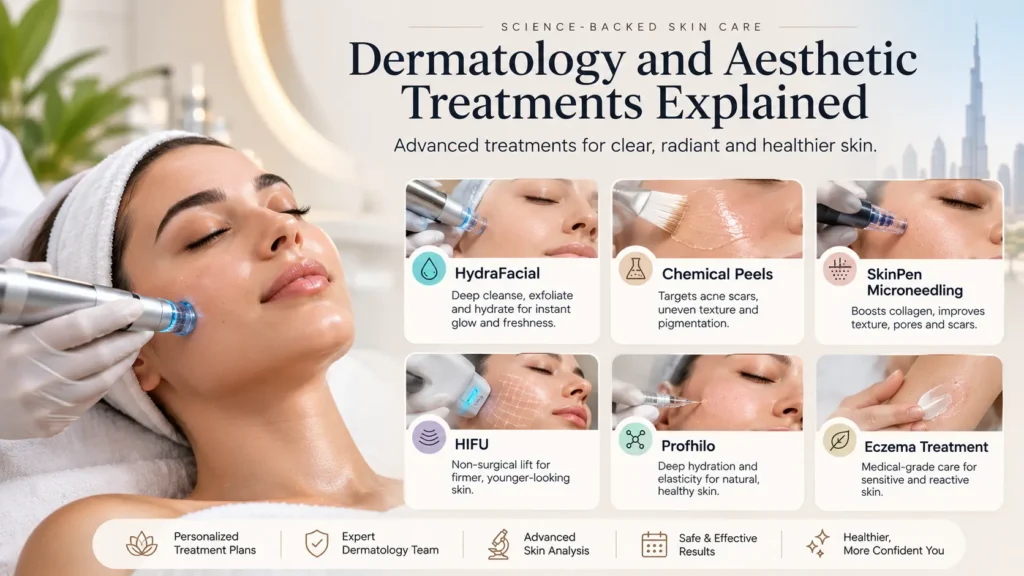
HydraFacial treatment is a multi-step process, cleanse, exfoliate, hydrate, all in one sitting. It’s popular partly because it’s gentle enough to repeat regularly and tends to leave skin looking noticeably fresher right after, handy given how much this climate drains moisture from your face to begin with.
Chemical peels rely on controlled exfoliation to work through acne scarring, rough texture, and pigmentation. They’re one of the more established routes for acne scar removal, though strength matters a lot here. A decent practitioner matches the peel to your skin type instead of going in heavy handed, because overdoing it causes more problems than it solves.
SkinPen microneedling creates tiny, controlled injuries that push the skin into repair mode on its own, which over a series of sessions can improve texture, shrink the appearance of large pores, and soften certain types of scarring. It’s not a one-and-done treatment. Most practitioners are upfront that results build gradually with consistency rather than showing up after a single visit.
HIFU treatment (high-intensity focused ultrasound, if the acronym’s new to you) works deeper than most facial treatments, aiming at the layers under the surface to help with firmness and early sagging. It’s the non-surgical route for people who’ve noticed some laxity starting but aren’t looking to go under the knife. Some people see more change than others, that’s just how it goes.
Profhilo trips people up because it sounds like filler, gets talked about like filler, but isn’t filler. It’s hyaluronic acid, spread across a wider area to boost hydration and elasticity rather than plumping one specific spot. If you walk in expecting cheek volume, you’re going to be disappointed. Know what you’re booking.
And for anyone actually dealing with reactive, sensitive skin, eczema treatment looks nothing like a facial. It’s figuring out what’s setting off the flare-ups in the first place, rebuilding whatever’s broken in the skin barrier, and managing it with topical care and, sometimes, an actual doctor’s input rather than anything cosmetic. Different problem, different playbook.
Your skin type, the real cause behind the issue, and whether you actually follow the aftercare instructions decide how any of this turns out. Skip that last part and even the right treatment underdelivers.
How Internal Health Connects to Skin
People treat skin like it’s some standalone thing, separate from everything else the body’s doing. It’s not. It’s an organ. If something’s off internally, skin is often the first place that shows it, which explains why someone can do everything right on the surface and still break out or stay dull.
Hormones get blamed less than they should for adult acne, especially the jawline kind that shows up in your late twenties or thirties out of nowhere. A basic hormone panel sometimes explains what months of skincare couldn’t. Gut health is the other one people underestimate. There’s a growing pile of research tying gut inflammation to eczema and acne flare-ups, enough that some practitioners now ask about digestion before they ask what products you’re using.
Nutrient gaps play a part too. Low zinc or vitamin D, to name two common ones, have been tied to slower healing and skin that reacts more easily than it should. A basic blood test occasionally explains months of frustration that no cream ever solved. Sleep and stress round it out, both affecting the skin’s overnight repair process and both capable of setting off eczema or acne through their effect on hormones.
That said, not every skin issue has some deeper internal cause. A lot of concerns are exactly what they look like and respond fine to topical treatment and better sun habits. But if you’ve tried the obvious fixes and nothing’s budging, it’s fair to wonder whether something underneath needs a look too.
Other Wellness and Aesthetic Services Worth Knowing About
Skin rarely stands alone from the rest of a person’s health, which is part of why a full-service wellness clinic in Dubai often makes more sense than a clinic that only does one thing. A few related services worth knowing about even if they’re not why you first walked in:
- Laser hair removal is one of the most booked aesthetic treatments alongside skincare, often handled by the same practitioners managing your facial treatments, which makes combining appointments simpler
- STD testing in JLT and similar preventive checks are increasingly offered alongside aesthetic services, especially at clinics taking a medicine-first approach instead of separating skin from general health
- Hormone and genetic wellness panels can uncover exactly the internal factors mentioned above that quietly drive skin issues
A clinic covering this range means fewer referrals bouncing you between different providers, and a practitioner who actually sees the full picture instead of just what’s on the surface.
What to Look for in a Skin Clinic
A clinic that starts with an actual conversation, not a treatment menu shoved in your face, is a good sign. Skin issues aren’t identical across people, and a place that bothers to ask about your history before recommending anything usually gets better results than one running everybody through the same script.
Licensing matters more than people realize too. Any clinic doing medical-grade treatments, microneedling, peels, injectables, should be run by qualified, licensed practitioners, not aesthetic staff operating machines with no medical oversight behind them.
Watch how they talk about outcomes as well. Anywhere promising guaranteed results or “permanent” fixes after one session, be a little skeptical. Real treatment is gradual. A practitioner who says so upfront, even if it’s not what you wanted to hear, is generally more trustworthy than one who oversells.
Daily Habits That Support Skin Health in This Climate
Treatments matter, but honestly, daily habits do most of the actual work here.
Sunscreen, every day, cloudy or not, even if you’re mostly indoors. UV comes through windows more than people think. Reapply if you’re out for a stretch, it’s still the simplest thing you can do against pigmentation and early aging. Hydrate from both sides, water intake and products with hyaluronic acid or ceramides if dryness won’t quit. Cleanse morning and night when it’s humid and sweaty, but don’t go overboard, stripping your barrier through over-cleansing creates a whole new problem. And give a routine actual time before judging it, especially if you’re managing something ongoing like acne or sensitivity.
Consistency wins over intensity almost every time. A boring routine done daily beats an elaborate one done occasionally.
A Few Common Myths Worth Clearing Up
Oily skin doesn’t need moisturizer, still one of the most common things people get wrong. Skip it and oily skin usually just overproduces oil to compensate, making things worse, not better. Then there’s the “base tan” idea, that a bit of sun now somehow protects you from more sun later. It doesn’t work that way. Any UV exposure adds up, regardless of the logic behind it. And no, price doesn’t equal effectiveness. A cheaper product with the right ingredients for your skin will outperform an expensive one that isn’t suited to you.
Frequently Asked Questions
How often should I see a dermatologist if nothing’s really wrong?
Once a year, maybe twice, even with no complaints. Catches pigmentation or texture changes early, before they turn into a bigger fix later.
Is microneedling safe if my skin’s sensitive?
Usually, yes, but it really depends on the person. Get a proper consultation first so they can flag whether you need a gentler version of it.
Chemical peel or microneedling, what’s the actual difference?
Peels work on the surface, controlled exfoliation. Microneedling goes deeper and triggers your skin’s own repair process. Which one’s better depends entirely on what you’re dealing with, hence the assessment first.
Can eczema just be cured?
No, not really. It’s managed, not cured. A decent eczema treatment plan focuses on cutting down flare-ups and figuring out triggers, not promising it disappears forever.
How long do results from Profhilo or a HydraFacial treatment actually last?
Varies a lot by person. Most people keep it going with occasional follow-ups rather than banking on one session lasting forever, since skin keeps aging regardless of what you do to it.
Aftercare Matters More Than People Expect
Whatever treatment you choose, aftercare often decides how good the result actually is, more than the treatment itself gets credit for. Skip sunscreen after a peel, jump straight into a pool after microneedling, or reach for harsh activities too soon, and you can undo a good chunk of the benefit, sometimes triggering irritation that outlasts the original problem. A decent clinic walks you through exactly what to do and avoid afterward. Worth actually following that advice instead of treating it as optional.
How Much Do Skin Treatments in Dubai Typically Cost?
Prices swing a lot depending on the treatment, the clinic, and how many sessions your particular concern needs. Comparing prices in isolation doesn’t tell you much. It’s more useful to compare what’s actually included, who’s performing the treatment, and whether that number reflects one session or a full recommended course. A cheap HydraFacial treatment or peel means very little if it’s done by someone underqualified, or if your concern genuinely needs a series rather than a one-off. A clinic worth trusting spells this out clearly during your consultation instead of leaving you to figure it out.
In Summary:
Skin health in Dubai isn’t something one product or one appointment fixes for good. The climate asks more of your skin than most places do, so the real approach usually combines a steady daily routine, real sun protection, and professional input when something just isn’t shifting on its own.
If you’re dealing with a stubborn skin concern and can’t tell whether it needs a professional eye, a proper consultation is a reasonable place to start. Lux Aeterna, a wellness clinic in Dubai based in JLT, offers skin analysis alongside dermatology led treatments like HydraFacial treatment, microneedling, chemical peels, HIFU treatment, and Profhilo, plus related aesthetic treatments such as laser hair removal and preventive options like STD testing in JLT. Starting with an honest assessment rather than a treatment menu tends to save both time and a lot of unnecessary trial and error.