


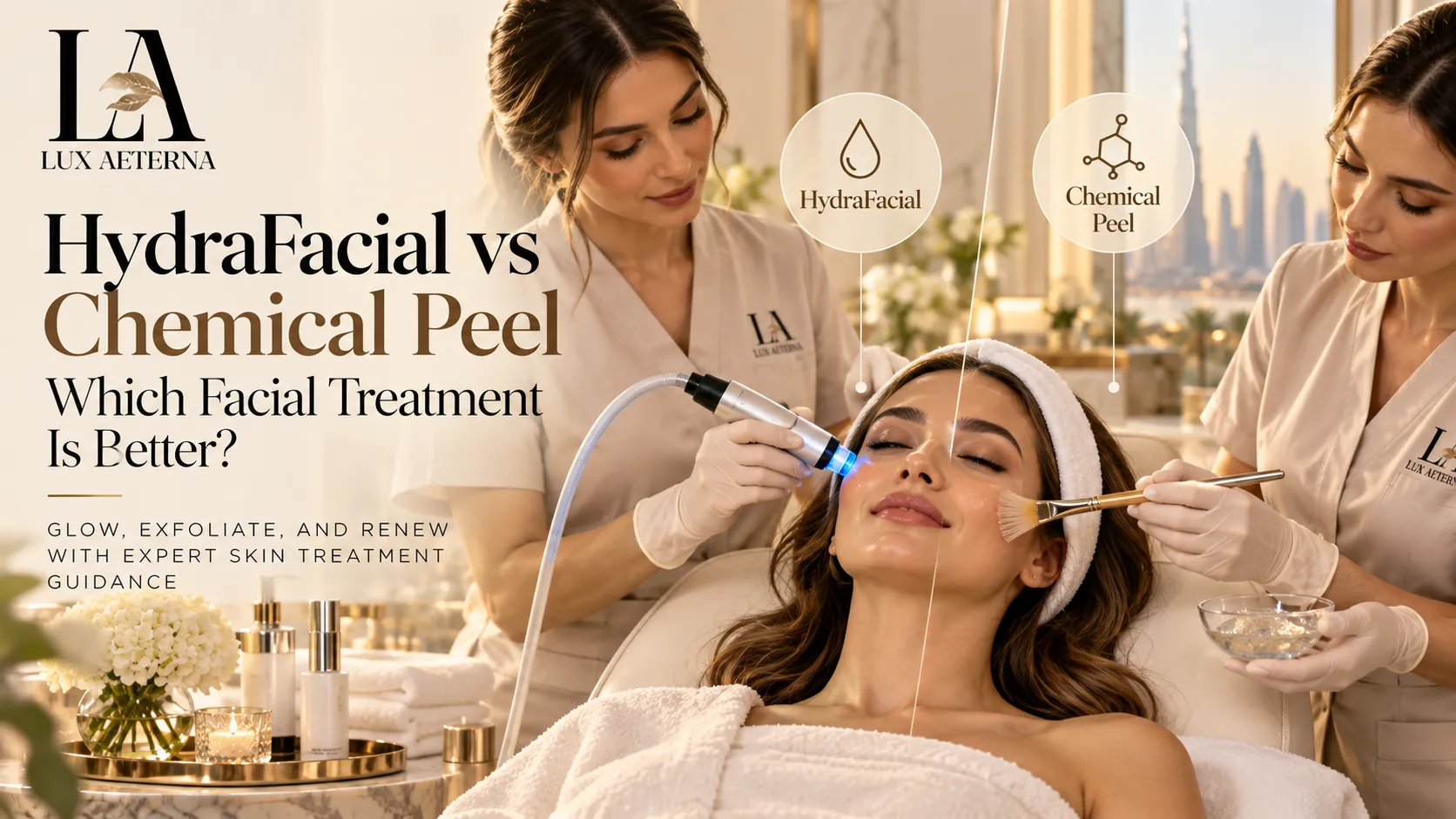
Two names keep popping up whenever someone’s trying to sort out what their skin actually needs, HydraFacial and chemical peel. Both get pitched as the fix for dull, congested, uneven skin. Both actually work. Just not for the same problem. Here’s the real difference, and how to figure out which one you actually need.
Stop Thinking Of Them As Rivals
Here’s the thing. A HydraFacial cleanses, exfoliates, and hydrates in one go, gently. A chemical peel goes deeper, targeting stuff like pigmentation, scarring, texture issues that a light refresh just won’t touch. Neither wins outright. They’re built for different levels of concern, and honestly, different points in someone’s skin journey.
What a HydraFacial Is Actually Doing
A HydraFacial in Dubai runs through a few steps, cleanse, light exfoliation, extraction, then a deep hydration finish, usually with serums picked for your skin type. No downtime, nothing invasive about it, which explains why so many people book one right before an event, or just keep it as a monthly reset.
A few things worth knowing:
- Gentle enough to do monthly without your skin ever getting irritated
- Great for dehydration, dullness, mild congestion, general “my skin needs a refresh” moments
- No peeling, no visible recovery time afterward
- You see the difference immediately, skin’s brighter and smoother right when you walk out
What a Chemical Peel Is Actually Doing
A chemical peel in Dubai takes a different route, using an exfoliating solution to strip away outer layers of skin so fresher, more even skin can surface underneath. Peels aren’t one-size-fits-all either, strength varies, and a practitioner usually picks the level based on what you’re targeting and how much exfoliation your skin can handle.
Worth knowing here too:
- Better suited for pigmentation, acne scarring, and texture issues that go beyond surface level
- Some visible peeling or sensitivity for a few days, depending on the strength used
- Often done as a series rather than a single visit for deeper concerns
- Results build up gradually across sessions, not overnight
So Which One Do You Actually Need
Comes down to what your skin’s dealing with right now, not which treatment sounds fancier.
- Dehydrated, dull, want to look fresh for something coming up? HydraFacial’s your move
- Pigmentation, acne scarring, texture that’s stuck around even with lighter treatments? Peel makes more sense
- Not sure which bucket you fall into? That’s literally what a consultation is for
A lot of people end up doing both, just at different times for different reasons. Someone running through a series of peels for scarring might still grab a HydraFacial in between purely for the hydration boost. They’re not stepping on each other’s toes.
Why This Actually Matters
Pick the wrong one and you’re not causing damage, just wasting time and money. A HydraFacial won’t touch stubborn pigmentation that really needed a peel. And going straight for an aggressive peel when dehydration’s your only real issue can leave skin more irritated than it started. That’s the whole case for getting a proper look before choosing either one, understanding what’s actually going on instead of picking whatever’s trending on Instagram that week.
A wellness clinic that offers both under one roof makes this a lot easier too, since whoever’s assessing your skin can steer you toward whichever one actually fits, instead of only having one option to push regardless of what walked through the door.
Frequently Asked Questions
Can I get a HydraFacial and a chemical peel on the same day?
Not usually recommended together in one session, combining that much exfoliation and extraction can overwhelm skin. Most practitioners space these out based on what your skin needs and how much recovery time makes sense.
Which one’s better for acne-prone skin?
Depends where you’re at. HydraFacial helps with mild congestion and hydration without aggravating active breakouts. A peel tends to work better once you’re dealing with leftover scarring or texture after breakouts have cleared.
Do I need more than one session for either to actually work?
HydraFacials often show results after a single visit, though plenty of people keep it monthly as maintenance. Peels usually need a series, especially for anything deeper like pigmentation or scarring.
Does one hurt more than the other?
HydraFacial’s genuinely comfortable, barely any sensation at all. A peel can sting or tingle during application, and depending on strength, you might get some peeling or sensitivity for a couple days after.