


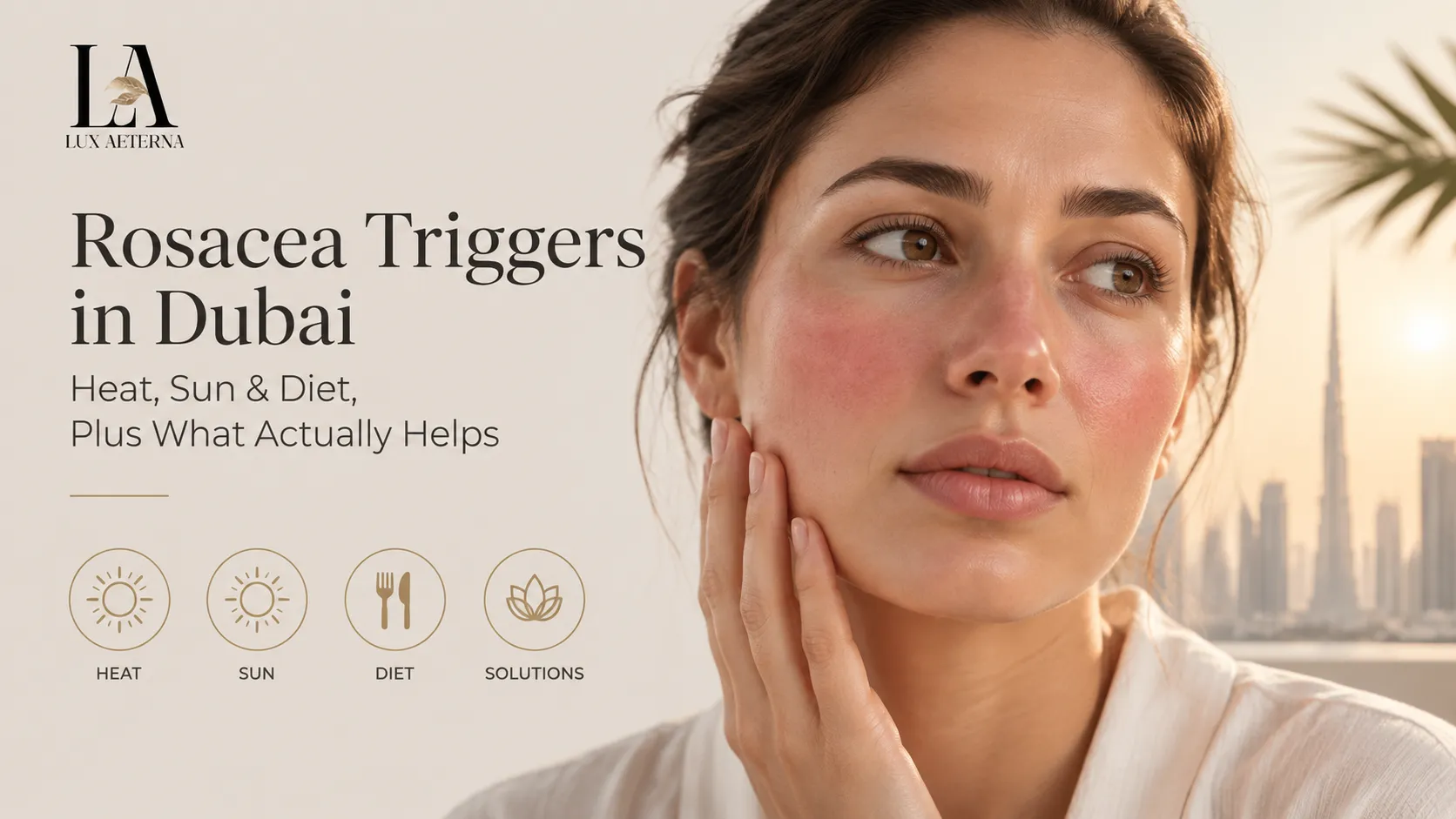
Cheeks and nose going red over almost nothing, a hot coffee, one spicy bite, a few minutes outside, and you’ve probably wondered if that’s just sensitive skin or something with an actual name. In a lot of cases here, it’s rosacea, and Dubai’s climate genuinely makes it worse than most places would. Let’s go through why, and what actually helps once it’s flaring.
What Rosacea Actually Looks Like
Rosacea comes across as redness that just doesn’t want to leave, mostly across the cheeks, nose, forehead, and chin, sometimes with tiny visible vessels or bumps people mistake for acne on first glance. A normal blush fades in a few minutes. Rosacea doesn’t work that way. Give it long enough and it stops being an occasional reaction and starts becoming a fixed part of how your face looks. It shows up more past thirty, and fair, sensitive skin tends to be more prone to it, though deeper skin tones get it too, just reading more as a dusky tone than the classic bright pink.
Why Heat Sets It Off
Heat is one of the biggest triggers there is, and Dubai basically runs on heat for most of the year. Anything that raises facial temperature, walking outside in summer, a hot shower, even a workout, can dilate blood vessels near the surface of the skin and bring on a flare. Combine that with indoor AC constantly swinging skin temperature the other direction, and rosacea-prone skin here rarely gets a real break to settle down.
Sun Exposure Makes It Worse, Not Better
UV exposure is another major trigger, and it’s a tough one in a city where sun is basically a year-round condition rather than a season. Sun doesn’t just cause a temporary flush either, repeated exposure damages the blood vessels under the skin over time, which can make redness more persistent even outside of an active flare. This is exactly why daily sunscreen isn’t optional for anyone managing rosacea here, skipping it pretty much guarantees more frequent flare-ups.
Diet Plays a Bigger Role Than People Expect
Certain foods and drinks are well known rosacea triggers. Common ones include:
- Spicy food, which raises facial blood flow almost immediately
- Alcohol, especially red wine, one of the most frequently reported triggers
- Hot beverages like coffee or tea, more about the heat than the caffeine itself
- Foods high in histamine, aged cheese, fermented items, certain processed meats
- Stress, which works through a similar blood vessel response as heat does
It’s not the same list for everyone though, which is part of why keeping a rough log of flare-ups against what you ate or drank that day can actually help identify your specific triggers rather than guessing.
What Treatment Actually Looks Like
Nothing clears rosacea for good in one shot. It’s really about keeping triggers in check and calming the skin down, over and over, consistently. A realistic approach usually includes:
- Gentle, fragrance-free skincare as the daily baseline, since harsh actives or exfoliants tend to set off a flare rather than help
- Daily sunscreen, non-negotiable given how much UV contributes to persistent redness here
- A skin booster treatment, which can support hydration and general skin resilience, useful for skin that’s already reactive and quick to irritate
- Facial aesthetics protocols adjusted specifically for rosacea, since standard treatments built for normal skin can trigger a flare instead of improving anything
Getting the Right Kind of Care
Getting an accurate read on your specific triggers and skin condition matters more here than with most concerns, since the wrong product or treatment can genuinely set things back. A proper rosacea clinic in JLT will usually start with understanding your pattern of flares before recommending anything, rather than jumping straight into a treatment plan built for someone else’s skin.
If rosacea’s just one piece of a bigger puzzle, sun sensitivity, pigmentation, overall skin health in this kind of heat, our broader guide on Skin Health and Dermatology walks through how it all connects and gets looked at together.
Frequently Asked Questions
Is rosacea basically the same thing as sensitive skin?
Not really. Sensitive skin reacts to something and then settles once that trigger’s gone. Rosacea’s got a vascular side to it, meaning the redness can stick around or come back on its own, no obvious trigger needed.
Can it be fully cured?
No, it doesn’t work that way. It’s chronic, something you manage rather than cure outright, though staying on top of triggers and having the right treatment plan can cut down flares by a lot.
Does wearing makeup make it worse?
Depends what’s in it. Heavy, fragranced, or alcohol-heavy formulas tend to irritate rosacea-prone skin, while mineral, fragrance-free options usually sit fine. Patch test anything new regardless.
Should I just assume it’s rosacea, or actually get it checked?
Get it checked, honestly. It can look a lot like eczema or even an allergic reaction on the surface, and treating it as the wrong thing wastes time or makes it worse. A proper look settles it fast.
This article is for general informational purposes only and isn’t a substitute for professional medical advice. Rosacea can vary significantly from person to person, and a qualified practitioner should assess your skin before recommending any treatment.