


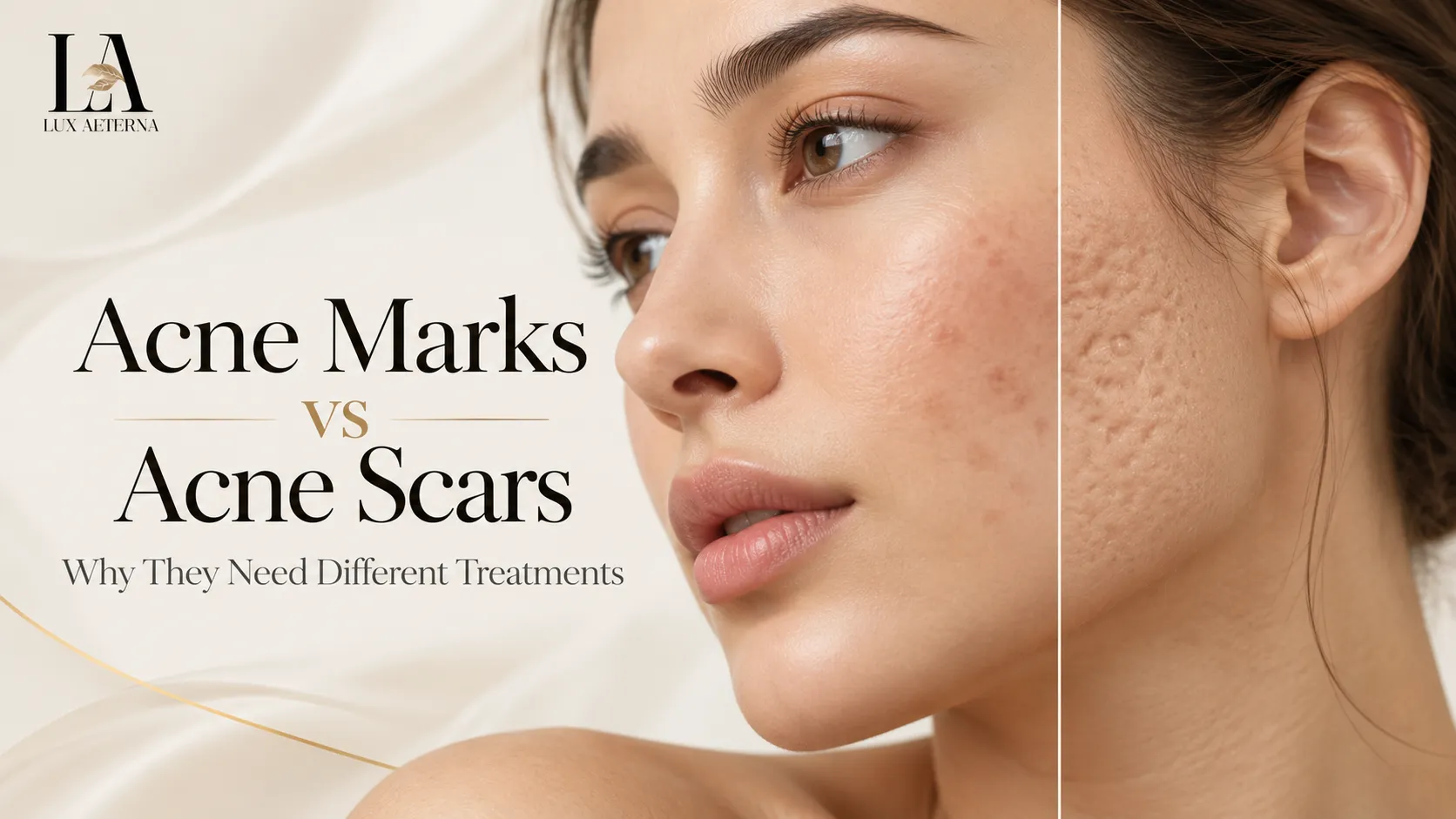
Try a quick test first. Look at the spot in good light. Now run a fingertip over it. If it feels smooth you have a mark. If you feel a dip or a bump you have a scar.
That small difference decides what you should do next. Acne marks vs acne scars is pigment versus tissue. A treatment made for one does very little for the other.
What an Acne Mark is
A mark is pigment. A pimple inflames your skin and the skin makes extra melanin in that spot. The patch stays after the pimple goes. Doctors call it post-inflammatory hyperpigmentation or PIH.
Marks look pink or red or brown depending on your skin tone. They are stubborn but not permanent. Plan for several months. Some dermatology sources say 6 to 12 months or longer.
A few things slow the fading:
- Sun exposure, which is hard to avoid in the UAE
- Picking or squeezing pimples
- Deeper skin tones, which tend to hold PIH longer
- New breakouts that keep adding fresh marks
What an Acne Scar is
A scar means collagen got damaged. A deep or long breakout leaves the skin short of what it needs to repair itself. You end up with a dent.
Most acne scars are dents. There are three common kinds:
- Icepick scars are small and narrow
- Boxcar scars are wider with sharp edges
- Rolling scars look like soft waves
Sometimes the skin makes too much collagen instead. That gives a raised hypertrophic or keloid scar. Scars rarely fade alone. Side light shows them clearly because the uneven surface casts a small shadow.
Acne Marks vs Acne Scars Side by Side
| Acne marks | Acne scars | |
| What it is | Extra pigment | Collagen loss or overgrowth |
| Color | Pink to brown | Often close to your skin tone |
| Feel | Flat and smooth | Pitted or uneven or raised |
| Side light | No shadow | Small shadows |
| Fades alone? | Usually over months | Rarely |
| Treatment goal | Calm skin and slow pigment | Rebuild collagen or lift the dip |
A Two Minute Check at Home
- Stand beside a window
- Tilt your face slowly
- Watch for tiny shadows around the spot
- Touch it lightly
Flat and shadowless means mark. Shadows or pits mean scar. You can have both at once so a clinician can confirm it fast.
Why the Wrong Treatment Wastes Money
Say you have a mark and you book a collagen treatment. You pay to rebuild something that was never broken. Now flip it. You have a boxcar scar and you buy a brightening serum. Pigment is not the problem so nothing much happens.
There is a riskier version too. Strong resurfacing on a flat mark can irritate the skin. On deeper skin tones it can leave the mark darker than before. That is why we prefer gentler and spaced out sessions for pigment.
What Treatment Looks Like
For marks the goal is simple:
- Calm the skin
- Wear sunscreen every day
- Use something that slows pigment
If you still get breakouts new marks keep arriving. So acne treatment usually comes first.
For scars the work happens under the surface where collagen sits. Common tools include:
- Microneedling
- Fractional laser
- Radiofrequency microneedling
- Filler for some depressed scars
Our acne scar removal page explains how these are matched to scar type. Scars from surgery or injury fall under scar treatment.
Many people have both. Heavy color can make a mild texture look worse. Once the pigment clears some people need far less scar work than they expected.
The Order that Usually Works
Treat active acne first. Fade the marks next. Look at the texture last. Use SPF through all of it. At our JLT clinic Dr. Irfan Ullah’s team assesses your skin before suggesting anything. That saves you from guessing in the bathroom mirror.
Frequently asked questions
How do I know if I have acne marks or acne scars?
Check the texture. Flat spots are marks. Dips or raised areas are scars. Side lighting helps and a skin analysis settles any doubt.
Can acne marks turn into scars?
Not directly. One is pigment and the other is damaged collagen. Still the same inflammation can cause both. Picking raises the chance of each.
What should I treat first if I have both?
Usually the active acne. Then the marks. Then the texture. Your doctor may change the order based on your skin tone and how easily it reacts.
Does Dubai’s sun make acne marks last longer?
It can. UV darkens marks that are already there and may slow fading. Wear broad spectrum sunscreen daily and reapply if you are outdoors for long. A tinted one can suit deeper skin tones.