


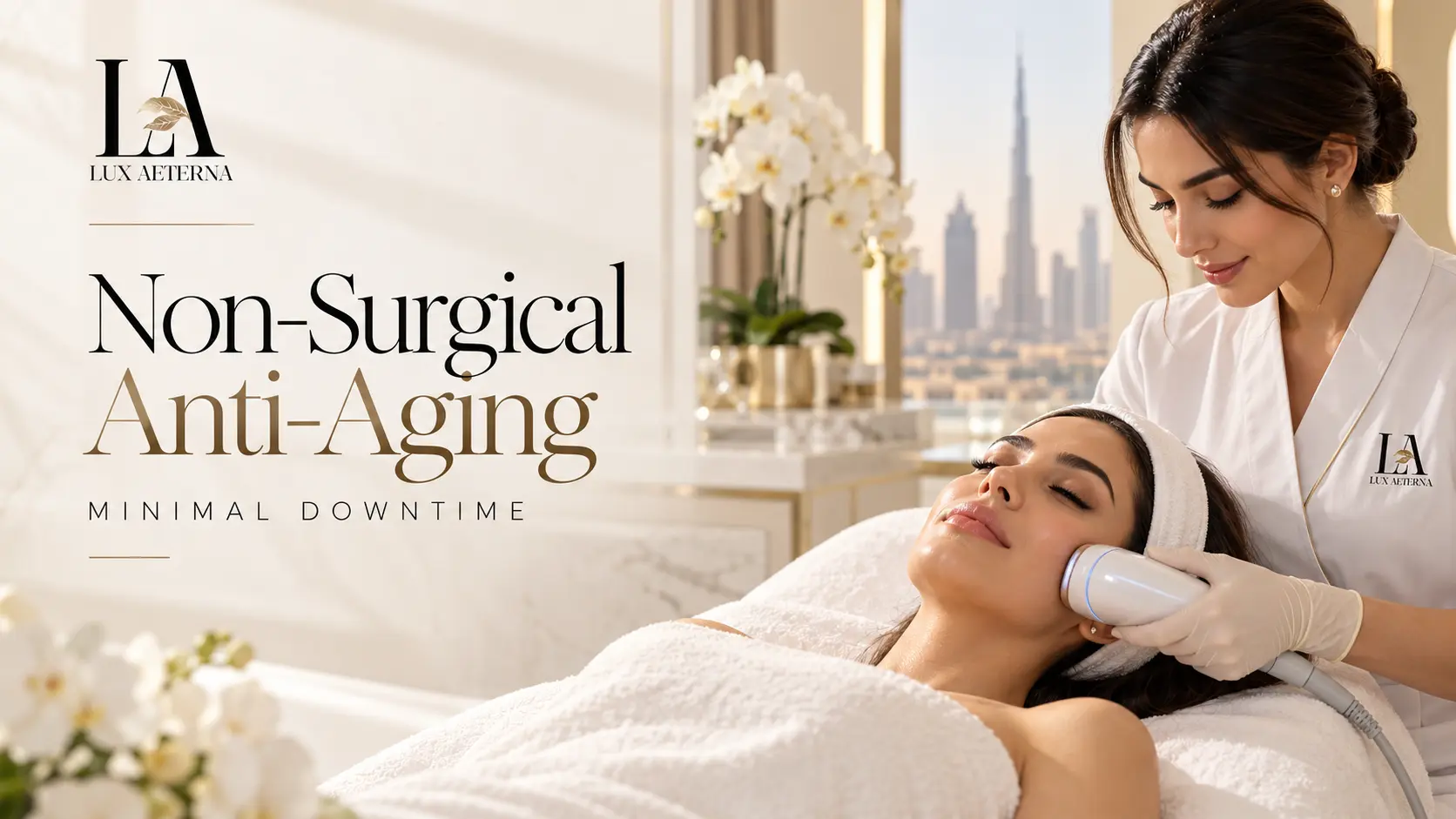
Somewhere between doing nothing and booking a facelift, there’s a whole category of treatments most people don’t really understand until they’re googling at 11pm. Mild sagging. Lines that weren’t there last year. Skin that’s lost some of its bounce, nothing dramatic, just enough to notice in photos.
None of that screams surgery. So what’s actually out there? What do these treatments feel like, how long do results stick around, and what do they realistically manage to do?
Minimal Downtime Isn’t the Same as No Effort
Instant. Effortless. Miracle. Anti-aging marketing leans on these words constantly, and most of it is noise. These treatments do work, genuinely, but inside limits. Know those limits before you book, and you won’t end up disappointed three weeks later.
Gradual results, not overnight ones. Barely any recovery time. A lower risk profile than surgery, that’s the realistic offer. What you won’t get is the dramatic, lasting shift a facelift gives you. Say that plainly upfront, and most people walk away from a non-surgical route genuinely satisfied.
HIFU, When You Want Something More Structural
High-intensity focused ultrasound, HIFU for short, works by sending focused energy deep under the skin to stimulate collagen, no cutting involved. A HIFU treatment in Dubai tends to appeal to people who’ve noticed early jawline or neck laxity and want something beyond a facial, but aren’t ready to consider surgery.
Most people describe it as a warm, sometimes slightly uncomfortable sensation during the session rather than something painful, and it’s usually done without anesthesia, though numbing cream is sometimes offered depending on sensitivity. A single session is typical, occasionally followed by a top-up six to twelve months later. Results build slowly, over two or three months, as collagen regenerates in the background, and tend to last around a year for most people, sometimes longer depending on skin and lifestyle. Mild redness or swelling right after is common and usually settles within a day. Most people walk out and go straight back to their day.
Thread Lifts Work a Bit Differently
Dissolvable threads go in under the skin and lift tissue mechanically, while also triggering collagen as they slowly dissolve. This one suits early to moderate sagging best, particularly around the jawline and mid-face.
Local anesthesia takes care of most of the discomfort during the procedure, so it’s not something to dread going in. A few days of swelling, bruising, or tenderness afterward is completely normal, and most people are back to their routine within two or three days. Usually it’s a single session, with results holding somewhere between twelve and eighteen months before the lift fades and a repeat starts making sense.
Skin Boosters, Mesotherapy, and the Maintenance Side of Things
Not every treatment here is about lifting. Skin boosters and mesotherapy lean more into hydration and overall skin quality, fine lines, dullness, that tired look skin gets over time without anyone being able to point to exactly why.
These involve a series of fine injections, mildly uncomfortable rather than painful for most people, and usually come as a short course of two to three sessions spaced a few weeks apart. Mild bruising or small bumps at injection points can show up briefly. Results tend to last three to six months, which is why a lot of people treat these as a maintenance step, something they return to every few months rather than a one-off fix.
Peels and Microneedling, the Entry Point for Most People
Chemical peels and microneedling both work on or just beneath the skin’s surface, nudging turnover and collagen response along. Texture, sun damage, early fine lines, that’s usually what brings people to these two first.
Peels can sting a little going on, and skin often looks pink or flaky for a few days after, depending on strength. Microneedling feels more like pressure than pain, especially with numbing cream at first, and any redness tends to settle within a day or two. Both usually need a short course, three to six sessions, a few weeks apart, before the improvement really holds. They pair well with other treatments too, rather than standing in for them.
What a HydraFacial Actually Adds
A HydraFacial isn’t really an anti-aging treatment on its own, let’s be honest about that. But it’s a genuinely useful piece of a longer routine. A HydraFacial in Dubai combines cleansing, exfoliation and hydration in one go, there’s no discomfort involved and zero downtime, which is part of why plenty of people fold it into their schedule monthly, just to keep skin in decent shape between the more targeted stuff.
When It’s Not Really About Aging, It’s About Scarring
Sometimes what looks like aging is really old acne scarring, just more visible now that skin’s lost some volume around it. Worth treating that separately rather than folding it into a general anti-aging plan. Acne scar removal needs its own assessment specifically, since the right approach, and how many sessions it takes, comes down to scar type and depth, not how skin’s ageing overall.
So Which One Actually Fits You?
Rough starting points, though a consultation will always narrow this down properly:
- Early jawline or neck sagging, want something structural. HIFU is usually the first thing worth discussing.
- Noticeable sagging around the jawline or mid-face, not ready for surgery. Thread lifts tend to come up.
- Skin feels dull, tired, dehydrated, no real sagging. Skin boosters or mesotherapy usually fit better.
- Texture, sun damage, and early fine lines are the main issue. Peels or microneedling are the usual starting point.
- Want a maintenance routine between bigger treatments. HydraFacial fits here.
Worth Asking at Your Consultation
A proper consultation at a wellness clinic in Dubai should start with an actual assessment, not a sales pitch, and a decent practitioner will tell you straight if something isn’t going to do what you’re hoping for.
- What’s realistically going to improve, and by how much
- How many sessions before you’d actually see a difference
- What recovery really looks like, even when it’s called minimal
- Whether there’s any medical reason this might not suit you, certain medications, skin conditions, or pregnancy can rule some treatments out
A Word on Expectations
Non-surgical treatments won’t replace surgery once sagging’s progressed significantly, and anyone promising surgery-level results from one non-invasive session is overselling it, plain and simple. What these treatments actually do well is slow things down, maintain, improve gradually. That’s not a consolation prize. For a lot of people, it’s genuinely the right amount of intervention, no more, no less.
This article is for general informational purposes only and is not a substitute for professional medical advice. Individual results, downtime and suitability vary by person, and any treatment decision should be confirmed with a qualified practitioner during a consultation.