

In short: Acne scar removal means treatments that improve the way acne scars and marks look once the acne itself has healed. What works depends on your scar type and skin tone. Most people need a few sessions and the improvement builds slowly.
How We Choose Your Acne Scar Treatment
Your doctor starts by looking closely at your skin. How deep are the scars. What type are they. How does your skin tone tend to react to treatment. They’ll ask about your health and any medications too and about anything you’ve tried before. That conversation is what lets us suggest an acne scar treatment that fits you instead of whatever happens to be popular.
Acne Scar Treatment Options
Depending on what we find your plan may include one or more of these.
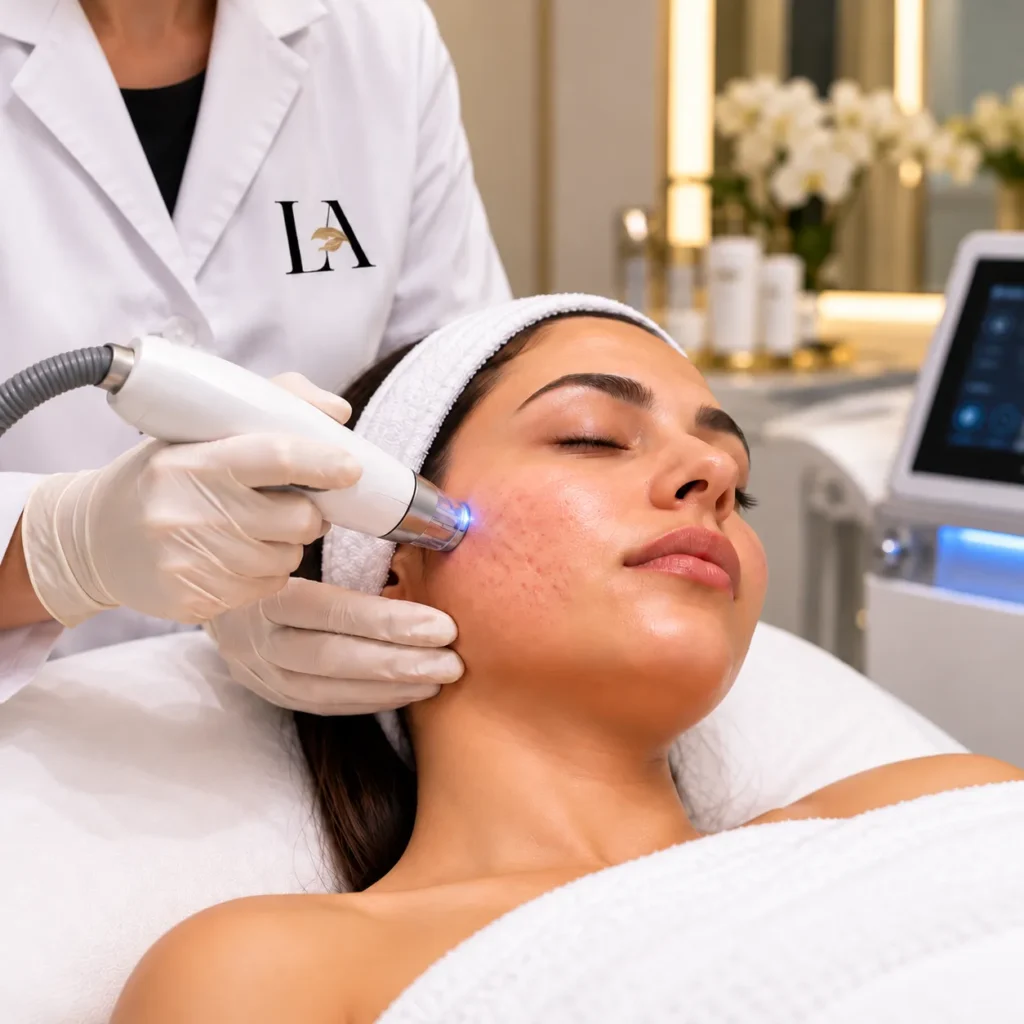
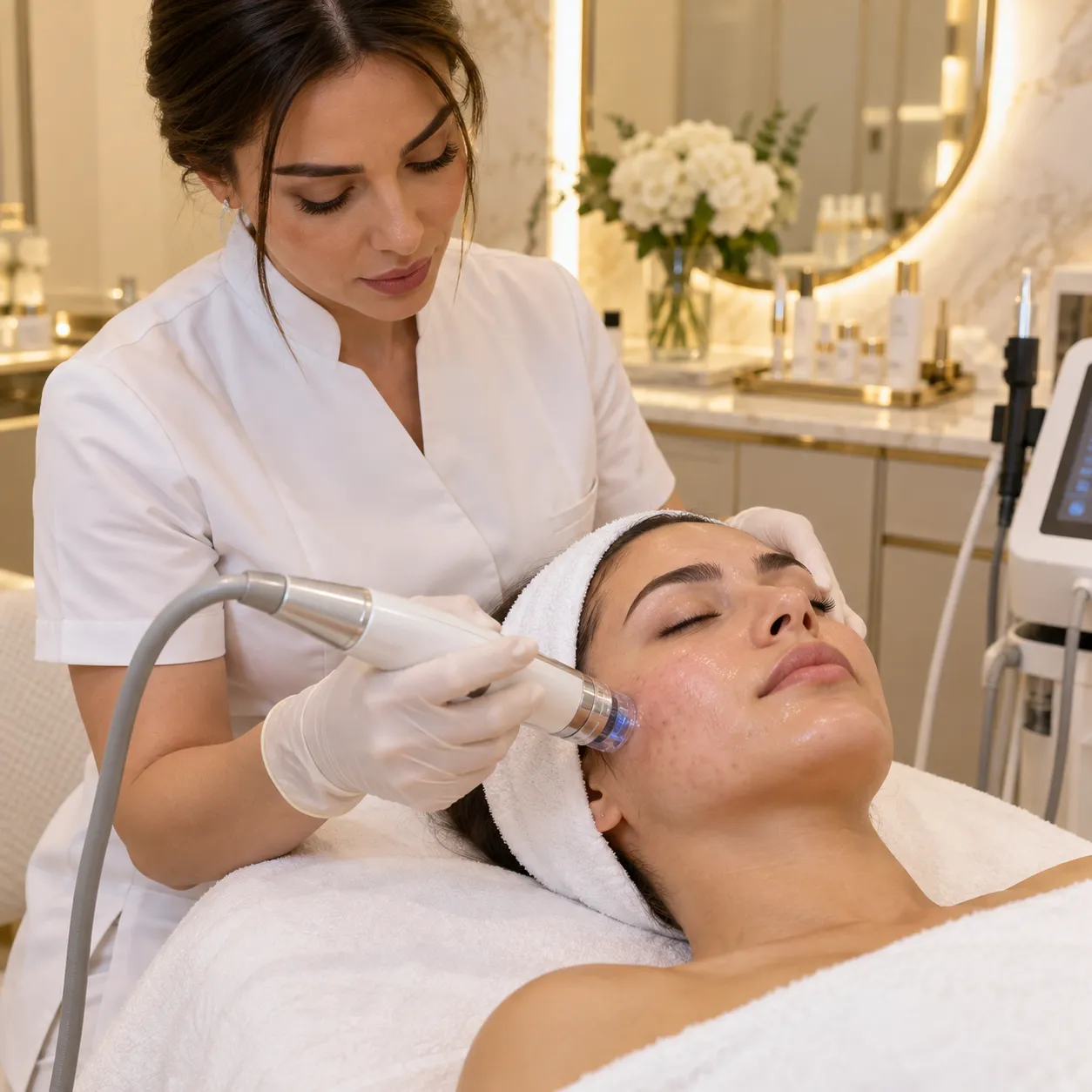
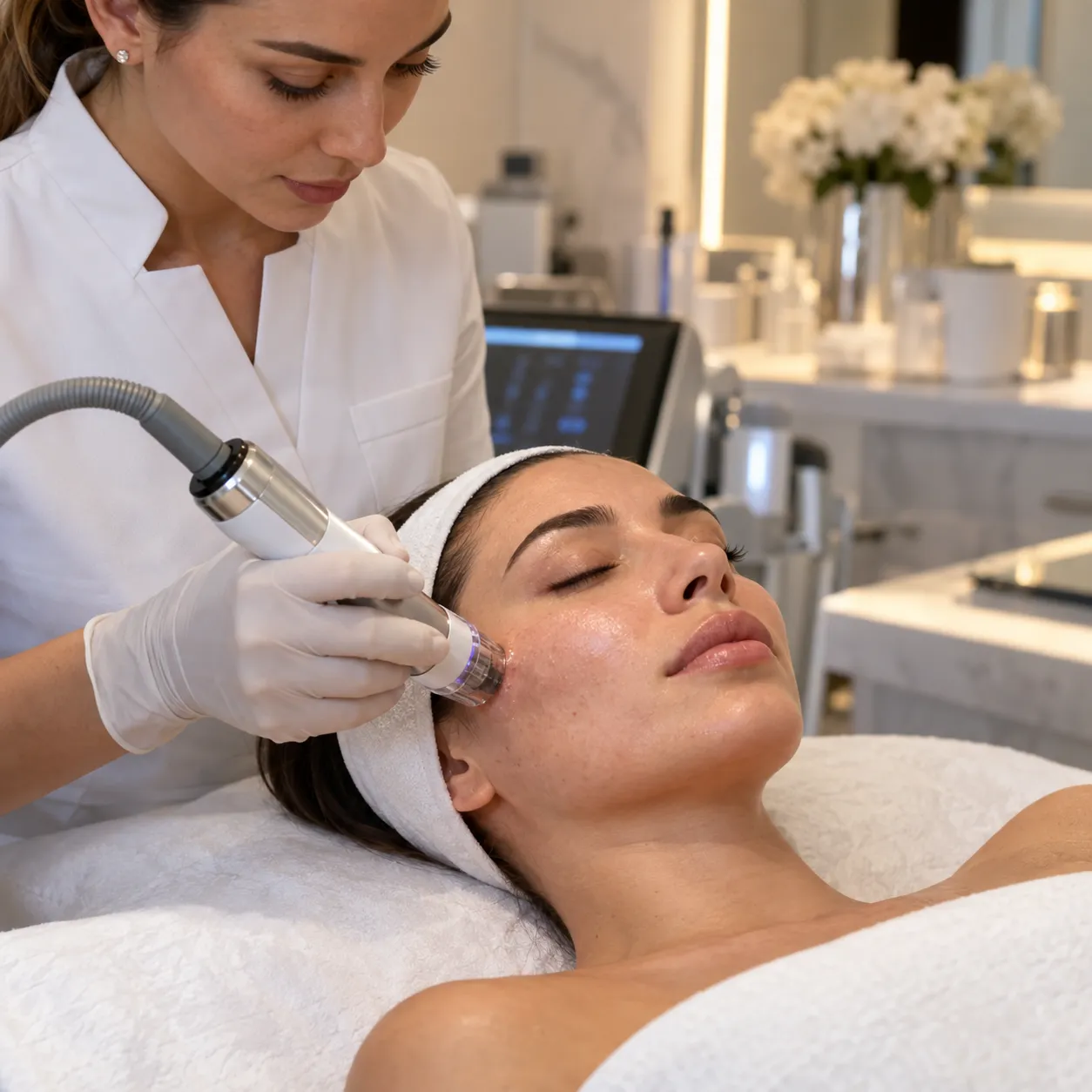
- Microneedling for acne scars: Tiny needles make fine channels in the skin which nudges it to renew collagen and softens texture. Some plans pair it with PRP made from your own blood plasma
- Radiofrequency microneedling: Adds radiofrequency energy to reach deeper layers and gets discussed for stubborn depressed scars
- Chemical peels: Medical-grade peels like PCA and Korean peels lift the surface layers and help fade pigmentation over repeated sessions
- IPL photofacial: Light-based treatment often chosen for red or brown marks left behind by breakouts
- Dermal fillers: Occasionally used to lift certain broad depressed scars for a while
- Laser resurfacing: Covered below
Laser Treatment for Acne Scars
Laser acne scar removal is probably the most searched option and it deserves a straight answer. Fractional laser resurfacing creates tiny controlled areas of micro-injury and the skin responds by building new collagen. Over time that can smooth the look of depressed scars.
It isn’t right for every scar or every skin tone though. Stronger resurfacing lasers carry a higher risk of pigment changes in deeper skin tones and the skin takes longer to heal. So your doctor decides whether a laser treatment for acne scars suits you or whether a gentler option like microneedling or a peel is the safer fit.
Who Plans Your Treatment
Plans come from our medical team which Dr. Irfan Ullah leads. He is DHA-licensed and an American Board-Certified Aesthetic Physician and a Certified Functional Medicine Specialist with more than 12 years of clinical experience across the UK and Dubai. He works alongside an aesthetic nurse and a laser therapist and a GP with a focus on dermatology and aesthetics.
Tell Us Before You Start
Some situations change what is safe or when treatment should happen. Let your doctor know if any of these apply.
- You are pregnant or breastfeeding
- You have taken isotretinoin (Roaccutane) recently
- You tend to form raised scars or keloids
- You get cold sores
- You have a recent tan or sunburn
- You use prescription skincare or other medications
What to Expect
Recovery depends on the treatment. Microneedling usually means a day or two of redness while stronger resurfacing needs longer. Most plans run as a series of sessions a few weeks apart because collagen takes its time. You’ll see changes build over weeks and months and not overnight. Sunscreen every day matters more than people expect. Dubai’s sun can darken healing skin and undo your progress.
Benefits of Acne Scar Removal by Lux Aeterna
Most people spot a more even skin tone first. Texture softens more slowly because collagen rebuilds at its own pace. Treatments that work on collagen tend to keep improving skin over time and aren’t a surface fix that fades after a few weeks. How much changes depends on your scar type and how deep it goes. Once scars have settled some people add a skin booster treatment for hydration and a fresher glow.
Understanding Different Types of Acne Scars
Acne scars aren’t one condition. They’re several different ones lumped under a single name.
- Icepick scars: Narrow and deep pits
- Boxcar scars: Wider dips with sharp edges
- Rolling scars: Soft wave-like dips caused by bands of tissue under the skin
- Hypertrophic scars: Raised scars that form when too much collagen builds up at the site
- Post-inflammatory hyperpigmentation and redness: Brown or red marks left after a breakout. They’re discoloration and not true scars and they usually fade slowly with time and sun protection
The first three are depressed scars which means skin tissue was lost while healing. Each type responds to different treatments. Microneedling and radiofrequency treatments often come up for depressed scars and peels and light-based treatments for discoloration. Very narrow icepick scars can be tougher to improve and may need a more targeted approach.
Why Does Any of This Matter?
A treatment that fades pigmentation nicely might barely touch a deep boxcar scar sitting beside it. Get the diagnosis wrong and your time and money go toward something that was never going to work. That’s why we won’t recommend any acne scar removal treatment before a proper assessment. As a medical wellness clinic in Dubai we look first and plan second.


